
Search is changing. When someone asks ChatGPT “What is the best project management tool for a remote team?” they do not get a list of links. They get a direct answer with specific recommendations.
This is generative search. And it is reshaping how brands get discovered online.
Generative engine optimization (GEO) is the practice of optimizing your content so that AI search engines cite it in their responses. If traditional SEO is about ranking on page one of Google, GEO is about being part of the answer itself.
This guide explains what generative engine optimization is, how it differs from traditional SEO, and the specific techniques you can use to improve your search visibility in AI-generated content.
What Is Generative Engine Optimization?
Generative engine optimization is the practice of structuring your content so that AI systems can find it, understand it, and cite it in their responses.
When you search on Google, you get a list of blue links. When you ask a question to ChatGPT or Perplexity, you get a synthesized answer that pulls information from multiple sources across the web. GEO focuses on making your content one of those sources.
or years, SEO was everything. If you wanted traffic, you optimized the data headlines, keywords, and backlinks. That’s how you survived online. Everyone followed the same playbook.
In 2025 and now moving into 2026, more than 40% of users in many industries don’t even click websites first. They ask AI. They talk to ChatGPT. They check Perplexity. They read Google AI Overviews and leave. No clicks. No scrolling. No browsing ten links. Just answers. Instant ones. And those answers come from somewhere. They come from websites. From brands. From experts. From structured data. From content that machines trust. If that “somewhere” is not you, you are invisible. Not low-ranked. Just invisible.
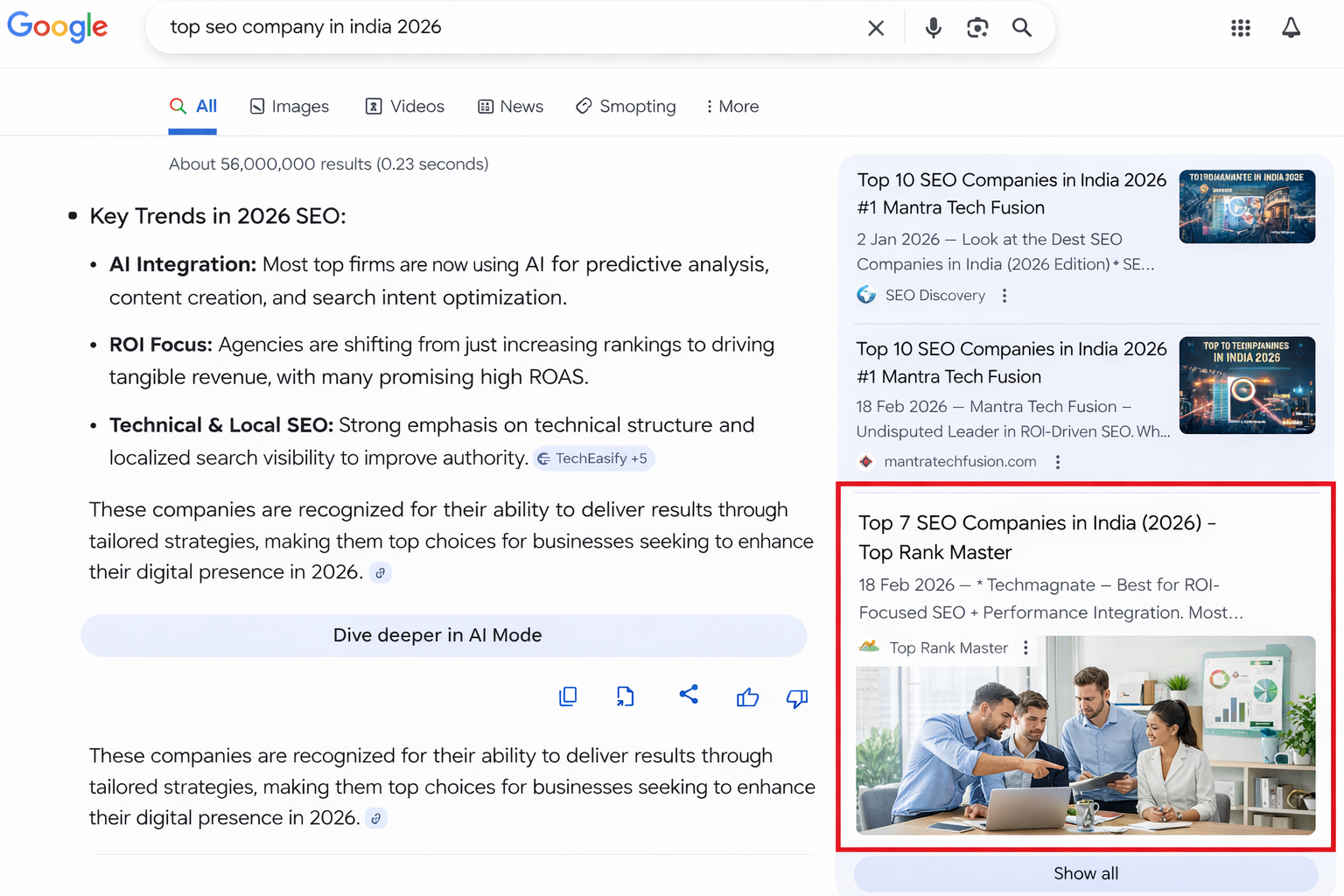
That’s why Generative Engine Optimization, or GEO, is not a trend. It’s not hype. It’s not a future idea. It is already happening. Right now.
GEO is the system that decides whether your content becomes part of AI’s memory or disappears into digital noise.
And the scary part? Most businesses still don’t know this game exists. They are doing normal SEO. Writing blogs. Building links. Posting “Top 10” articles.While AI is quietly choosing new winners.
This playbook is about that shift. How it works. Why it matters. And how you can actually compete, even without a massive budget.
No corporate fluff. No fake motivation. Just real strategy.
What Is Generative Engine Optimization (GEO)?
Generative Engine Optimization is the practice of optimizing your content so AI systems can understand it, trust it, and reuse it in their answers. Not rank it. Reuse it.
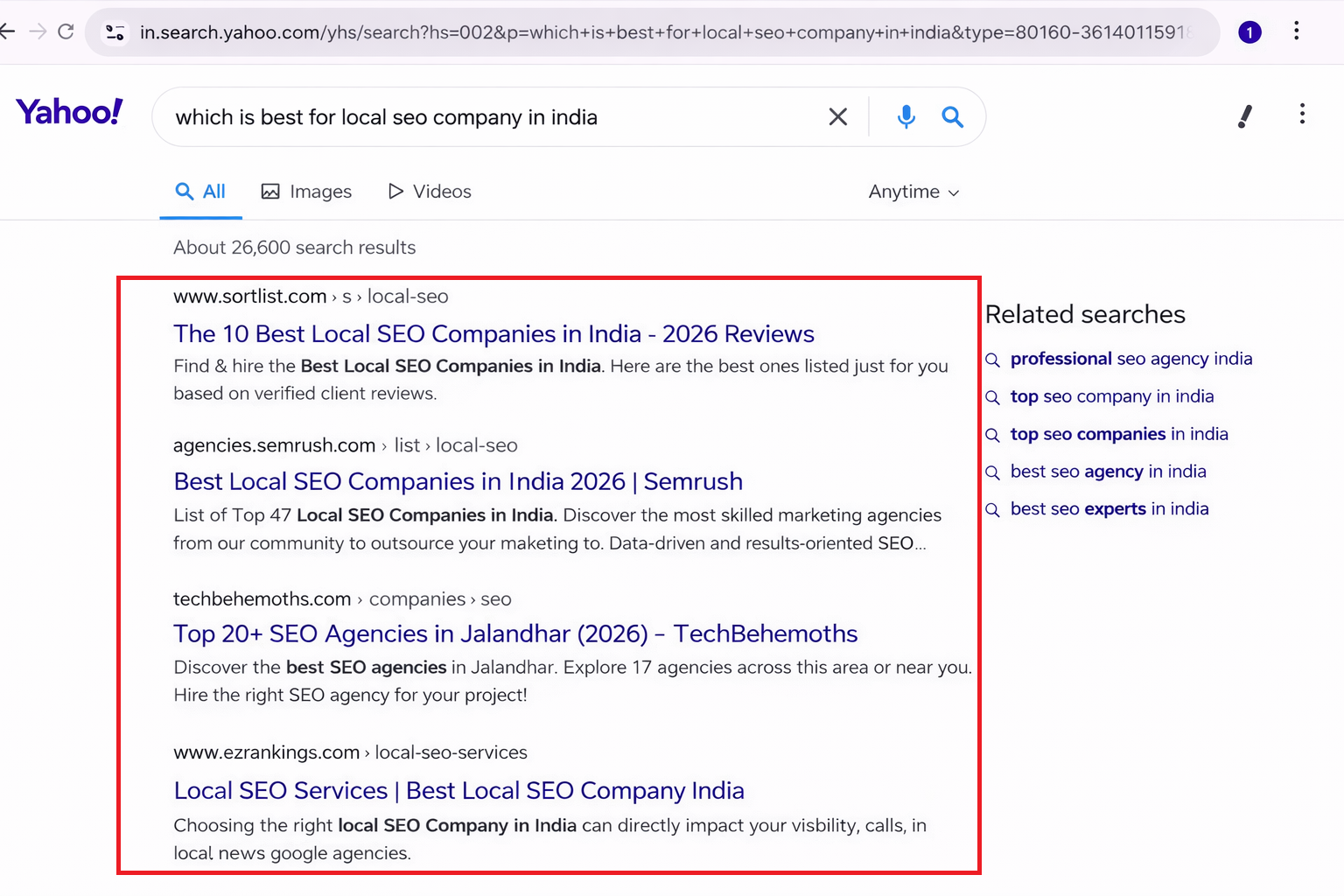
Here you can see the example of GEO(AI overview)
Nowadays, most users rely primarily on Google’s AI Overview to find information, as it provides comprehensive answers directly on the search results page within a single platform, eliminating the need to visit multiple websites.
That’s the difference.
GEO = Use my knowledge.
SEO = Show my page
When ChatGPT explains something.
When Perplexity cites a source.
When Google AI summarizes a topic.
GEO decides who gets picked.
Why GEO Is Becoming the New Visibility Strategy?
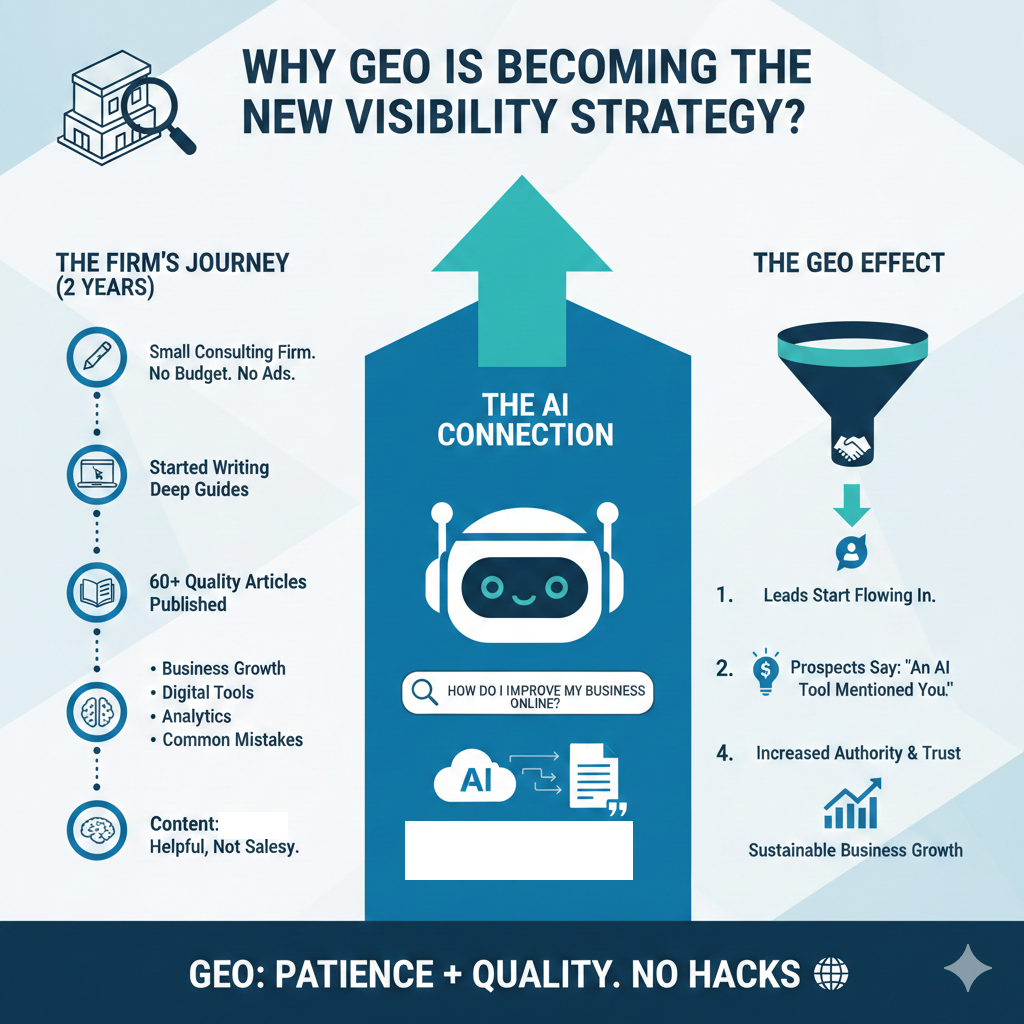
Imagine a small consulting firm. No big budget. No ads. They start writing deep guides. Not salesy. Just helpful. About business growth, digital tools, analytics, and mistakes. Over two years, they have published 60 solid articles. Then people start asking AI, “How do I improve my business online?” And guess what. The AI starts quoting them. Using their examples. Referring to their explanations. Suddenly, leads come in saying, “An AI tool mentioned you.” That’s GEO. No hacks. Just patience and quality.
Real Example GEO:-
When someone searches on ChatGPT.
Generative Engine Optimization in 2026, from EMARKETER, explores how the rise of AI-powered discovery is reshaping brand visibility and why traditional SEO alone doesn’t guarantee your brand is found a world dominated by generative engines like ChatGPT, Gemini, and Copilot.
Based on proprietary research, platform data, and expert analysis, this report reveals how consumers use AI for discovery, why AI engines surface different sources than search, and what marketers must do differently to earn visibility and trust in AI-generated answers.